
Buried lines · La Puente & West Covina, CA · Below the surface
Underground Leak Detection & Repair in La Puente & West Covina, CA
Under every La Puente lot runs a small municipality nobody sees: the service line, irrigation laterals, pool plumbing loops, hose bib runs, sometimes a gas-adjacent trench and an old abandoned line or two. When water starts vanishing into that hidden grid, (626) 898-6169 maps it instead of excavating it.
The buried grid, and why leaks there stay invisible
Soil is a patient accomplice. The alluvium the San Gabriel River laid down across this valley drains water downward efficiently, so a buried leak can run for a long time before it betrays itself at the surface. The tells are indirect: a meter that will not sit still, a pump that cycles, a mushy stripe across a lawn, salt-white mineral crust on a walkway edge, or, on the long parcels toward the Avocado Heights border, a fence line where weeds outgrow everything else in a dry month.
The first task is not finding the leak. It is finding out which of the several buried systems is losing, because a pool loop, an irrigation zone, and the domestic service line all soak the same dirt.
Isolate, trace, listen, mark
Isolation comes first: valves and pressure tests split the underground world into testable pieces, domestic supply versus irrigation versus pool, until one of them owns the loss. Electronic tracing then maps the guilty line’s true route and depth, which on older properties diverges freely from memory and from any sketch in a drawer. Acoustic ground listening localizes the escape along that route, correlation tightens long runs, and tracer gas resolves the stubborn cases where saturated ground muffles everything.
The deliverable is a mark on the surface directly over the breach, with depth estimated, so the excavation that follows is a keyhole and not a campaign.
Excavation with manners, repair with proof
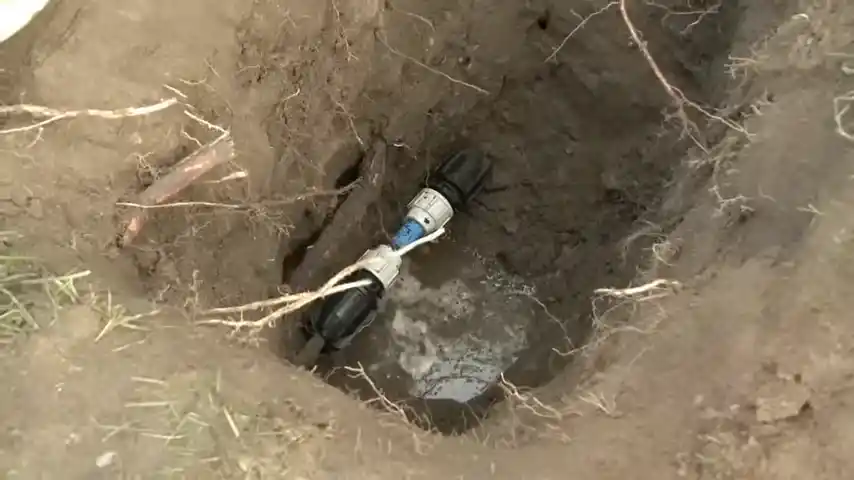
We open at the mark, by hand near other utilities, support what crosses the hole, and repair with material matched to the line: pulled PE or copper for domestic runs, schedule-rated PVC for irrigation mains, rigid pressure pipe for pool plumbing. Bedding and compaction get done properly because a repair sitting in a void is a repeat appointment with extra steps. Then the system is pressure tested against the same gauges that convicted it, and only after it holds do we close the ground and restore the surface.
Old abandoned lines we encounter get capped and noted on your documentation, which quietly prevents the next mystery a decade out.
Long lots, old trenches, and the local pattern
The properties along the city’s northwest fringe, larger parcels near the horse trails, carry the longest buried runs and therefore the most underground surprises: laterals extended in stages over decades, splices from three different eras, and depths that vary with whoever held the shovel. Down in the standard tracts the runs are shorter but the hardscape is denser, so accuracy matters for the driveway’s sake instead of the distance’s.
Either way the economics are identical. Precision at the surface is what keeps underground work affordable, and precision is a phone call away: (626) 898-6169.
Underground leak questions from La Puente lots
How deep are these pipes, and can you find them anyway?
Typical residential burials here run from about a foot for irrigation laterals to roughly two feet or more for domestic service lines, with plenty of local exceptions. Electronic tracing reads route and approximate depth from the surface, and acoustic methods work through that cover. Depth affects the excavation, not the detection; we locate lines well beyond residential depths.
A soggy spot appeared, then disappeared. Did the leak fix itself?
No leak retires voluntarily. What changes is the soil’s bookkeeping: cooler weather, a shifted flow path, or the water finding a drain rock layer can pull the evidence back underground while the loss continues. Trust the meter over the mud. If the meter test shows movement with everything off, the leak is still on duty regardless of how the lawn looks this week.
There are utilities everywhere under my yard. Is digging safe?
That is exactly why the sequence is trace first, dig second, and why marking underground utilities before excavation is standard practice on every job. We locate the target line and respect everything else’s corridor, work by hand where services converge, and expose crossings carefully. A marked, planned keyhole beside a known route is routine; a speculative trench is where yard disasters come from.
A question we did not answer here is a call we are glad to take: (626) 898-6169.
Related services & areas
Below-grade problems tend to arrive in these combinations on the bigger parcels.
Water is patient. Be less patient than the water.
Pinpoint detection, upfront numbers, one clean repair. Any La Puente street, any hour on the clock.
☎ Call (626) 898-6169 · 24/7