
Pinhole leaks · La Puente & West Covina, CA · San Gabriel Valley
Pinhole Leak Detection & Repair in La Puente & West Covina, CA
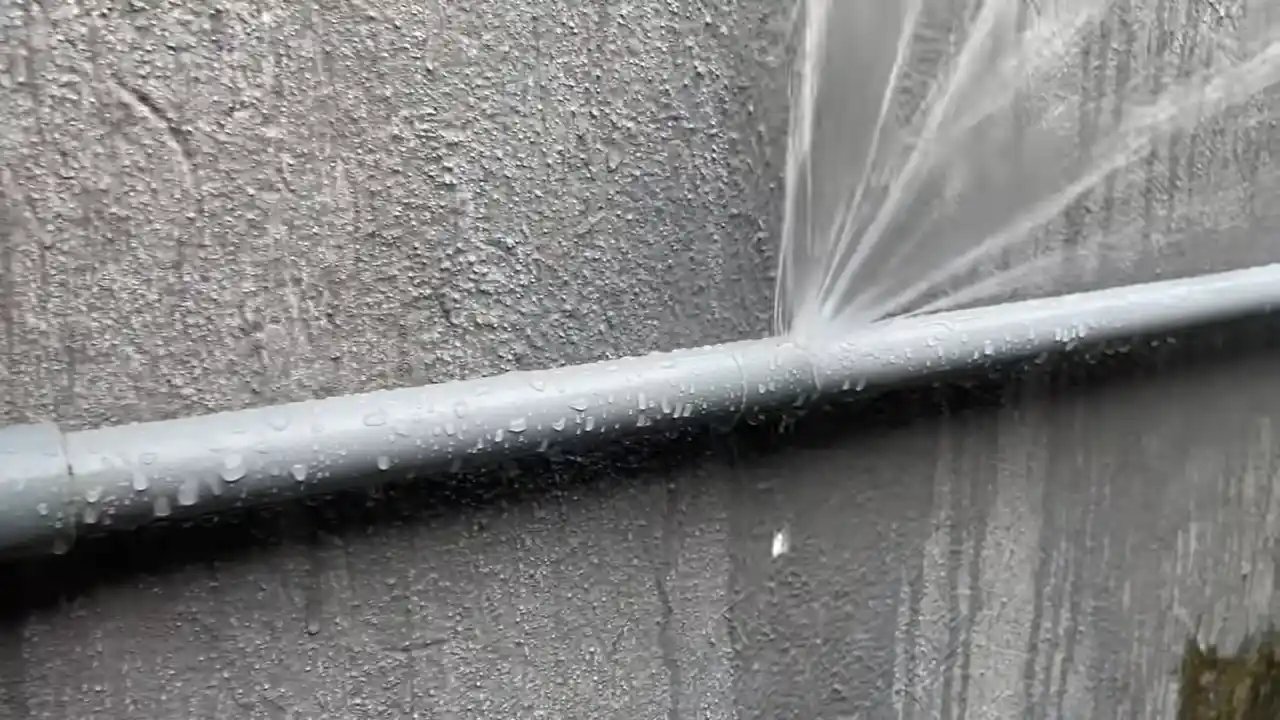
Why does a healthy-looking copper pipe suddenly spray a needle of water across the garage? Because it was never healthy, only quiet. Sixty years of hard basin water works from the inside out, and La Puente’s copper is right on schedule. (626) 898-6169 reaches the people who fix it daily.
The chemistry working against La Puente copper
Pinhole leaks are pitting corrosion: localized attack that drills a tunnel through the pipe wall while the surrounding metal stays intact. The water feeding that process here comes from the Main San Gabriel Groundwater Basin, pumped locally since 1924 by the La Puente Valley County Water District, and it is genuinely hard at roughly 10 to 17 grains per gallon, around 170 to 290 mg/L of dissolved calcium and magnesium. Mineral scale deposits unevenly inside the pipe, and the boundaries of those deposits become the exact sites where pitting concentrates.
This matters more in La Puente than in cities on softer imported blends, because the copper here is also old. The tract streets around Workman Avenue, named for the Rancho La Puente pioneers who ran cattle on this land a century before the plumbers arrived, were built out in the incorporation boom. Their supply lines have been fighting basin chemistry since the Eisenhower administration.
Finding a leak the size of a sewing needle
A pinhole behind drywall does not announce itself. It mists. The first evidence is usually a bubble in paint, a soft baseboard, a musty smell in one room, or a stain blooming on the ceiling below a second-story bathroom. Moisture meters map the wet zone, thermal imaging shows the temperature shadow of evaporating water, and acoustic equipment picks up the hiss of the spray itself. We open the wall at the leak, not near it.
Because pitting is a system-wide process, we also inspect the exposed pipe around the failure. Green-blue crust on joints, dimpling on the pipe surface, and previous repair couplings are all census data on how far along the rest of the line is. You get that assessment straight, whether it argues for a small fix or a bigger conversation.
Fix the hole or fix the pipe: an honest decision tree
One pinhole on an otherwise clean system gets a section replacement: cut out the failed length, install new pipe, done. A second pinhole within a couple of years is the line telling you its wall thickness is spent, and at that point money spent on serial patches is money not spent on the reroute or repipe that actually ends the problem. A whole-house repipe in PEX or new copper, permitted and inspected, resets the clock by decades.
We price each path upfront and we do not dramatize the choice. Some houses genuinely need one coupling and a paint touch-up. Some are three walls away from their fourth leak. The detection visit tells us which one yours is; (626) 898-6169 starts it.
What you can do before we arrive
If the pipe is actively spraying, shut the main valve at the house riser or the angle stop at the meter and open a low faucet to drain pressure. Move furniture off the wet zone and get air circulating; a box fan pointed at a damp wall tonight saves drywall tomorrow. Do not tape, epoxy, or clamp the pipe and call it done. Temporary bandages hold just long enough for the next pit, a few inches away, to finish forming.
Then note anything you have observed: when the sound started, which rooms smell damp, whether the water heater has been cycling. Small observations shorten detection time, and shorter detection is cheaper detection.
Pinhole leak questions we hear across the SGV
Will a water softener stop pinhole leaks in my La Puente home?
A softener addresses the hardness side of the equation and is worth considering for scale on fixtures and water heater life. What it cannot do is restore wall thickness that pitting has already consumed. On copper that is sixty years into hard basin water, a softener slows the future without repairing the past, so treat it as prevention for newer pipe, not as a cure for old pipe.
Is a push-fit or epoxy patch an acceptable fix?
As an emergency measure to stop active spraying until a proper repair, a clamp is fine. As a finished repair, no. Pitting that opened one hole is active along the whole run, and patches concentrate stress at their edges. The correct minimum fix is cutting out the failed section and installing new pipe, and the correct question is always whether the rest of the line deserves the same.
One leak so far. How do I know if a repipe is really justified?
Ask for evidence, not adjectives. We show you the removed pipe section cut lengthwise so you can see the remaining wall and the pit field, plus the condition of accessible pipe elsewhere in the house. If the metal argues for a repipe, you will see why with your own eyes. If it does not, we say so and you keep your money.
A question we did not answer here is a call we are glad to take: (626) 898-6169.
Related services & areas
Pinhole trouble in the Workman-era tracts rarely travels alone; these are its usual companions.
The leak is not going to fix itself
Detection first, honest options second, one precise repair third. La Puente to the borders, any hour.
☎ Call (626) 898-6169 · 24/7