
Repipes · La Puente & West Covina, CA · The endgame, done properly
Whole-House Repipe Service in La Puente & West Covina, CA
Every pipe system has a last chapter, and much of La Puente’s was written in the same few years: streets plumbed together around incorporation are aging out together now. A repipe is that chapter done on your schedule instead of the water’s. (626) 898-6169 plans them weekly.
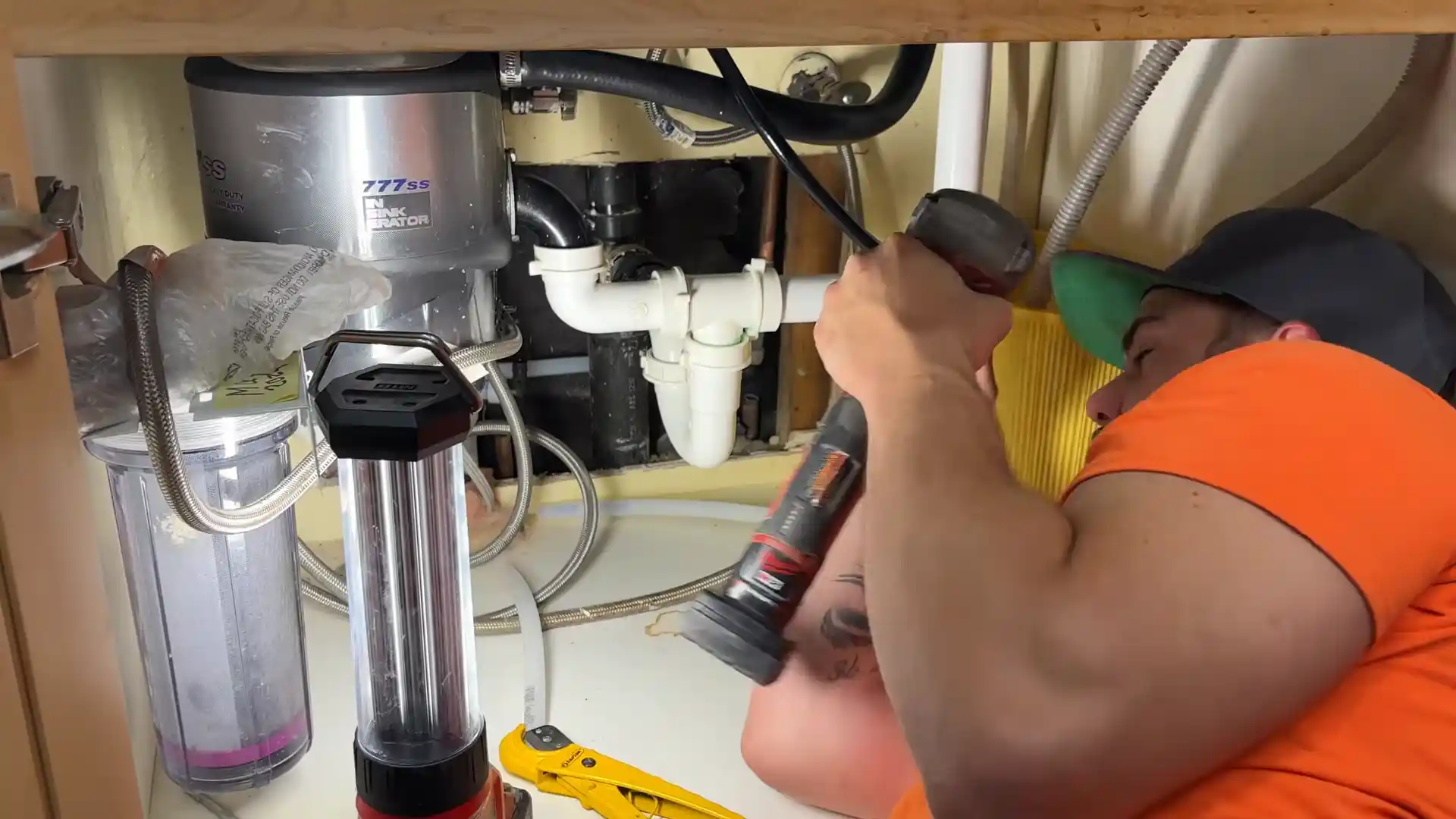
How you know the endgame has arrived
No single leak orders a repipe. The evidence that does is cumulative: a second or third pinhole on the same vintage lines, pipe walls that measure thin where we have cut samples, pressure fading through corroded galvanized, or a slab leak on a system whose twin runs everywhere under the house. When the failures start selecting themselves from one installed generation, patch economics collapse; every repair buys months while the next weak point matures.
Our rule is evidence over adjectives. If your house is there, we show you the cut pipe and the math. If it is not, we say that instead, because a repipe sold early is just an expensive patch with better marketing.
PEX or copper: the real tradeoffs
Both materials do the job for decades; the choice is about fit. PEX runs faster and therefore cheaper, tolerates the rare cold snap, pulls through walls with fewer openings, and shrugs at the water chemistry that pitted its predecessor. Copper offers rigidity, a long proven record, and indifference to rodents and UV, at more labor and more wall access. In this water, both benefit from correct pressure regulation, and PEX’s fitting-dependent nature makes installer quality the variable that matters most.
We quote both where both make sense, with the differences in access, timeline, and cost laid out plainly. The house and your plans pick the winner, not a slogan.
What the project actually looks like
A typical single-family repipe here runs a small number of days, not weeks. Day one routes and pulls the new system alongside the old, with water off only in short announced windows. Transition day switches the house to the new lines, after which the old ones are abandoned dead in place. Access openings, planned in advance and listed for you, get patched to paint-ready. The permit is pulled before work starts and the inspection happens before walls close, because a repipe without inspection is a warranty with no witness.
Households keep functioning throughout: evenings with water, mornings with notice, and a crew that treats the occupied house as occupied.
The repipe as a value decision
Against a future of serial leak repairs, drywall patches, and the one slab leak that soaks a floor, a repipe is often the cheaper decade even before pricing the peace. It also converts an aging-plumbing disclosure into a selling point when the house changes hands, with permits and inspection records to show. For the multi-generational households common here, it is infrastructure for the family timeline, not just the fiscal year.
Get the evidence-based verdict on your system, and real numbers for both materials, at (626) 898-6169.
Repipe questions from the boom-era streets
Do we have to move out during a repipe?
No. The work is staged so the house keeps water outside of short announced shutoff windows, typically while lines transition. Bedrooms and kitchens stay usable, dust is contained at the access points, and the site is tidied daily. It is a few days of living with a crew in the house, not a relocation, and we schedule the noisy phases around your household’s realities.
Does a repipe cover drains too?
A standard repipe replaces the pressurized supply system, which is where the age-driven failures concentrate. Drains are a separate system with their own assessment: many boom-era drain runs still serve well, while others, particularly bottom-worn cast iron, deserve their own project. We camera the drains during the repipe conversation so both verdicts arrive together and nothing gets bundled that does not belong.
What happens to the old pipes in the walls and slab?
They retire in place. Old lines are cut back, drained, capped, and abandoned dead, which is standard, code-accepted practice; extracting them from slabs and cavities would add demolition for no functional gain. Your documentation records the new system’s routing, so future work never has to wonder which lines are live. The old copper under the slab becomes archaeology, not risk.
A question we did not answer here is a call we are glad to take: (626) 898-6169.
Related services & areas
Repipe conversations usually begin on one of these pages first.
Structure-deep or system-wide, it starts the same way
A symptom described, a system tested, a repair priced before it begins. Any hour, any La Puente street.
☎ Call (626) 898-6169 · 24/7