
Copper pipe · La Puente & West Covina, CA · The 1950s cohort and after
Copper Pipe Leak Detection & Repair in La Puente & West Covina, CA
Copper earned its reputation honestly: it outlived the galvanized it replaced and it soldered into systems that ran for generations. But every material has a service life, and La Puente installed most of its copper in one great burst two generations ago. (626) 898-6169 handles what the calendar sends next.
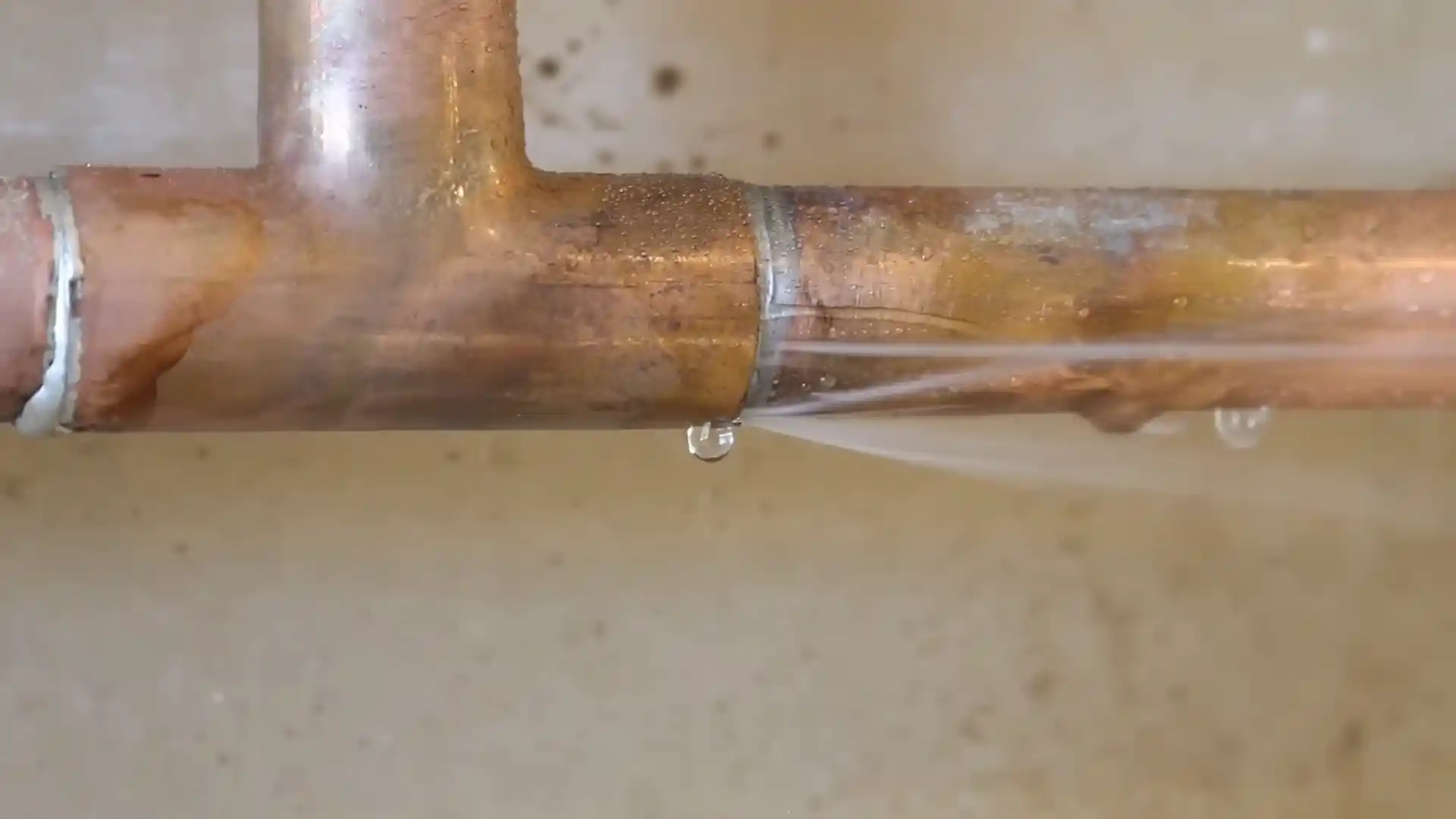
Three copper generations under one city
The copper in La Puente walls is not one population but three. The incorporation-boom tracts carry the oldest and largest cohort, thin-wall lines soldered in the 1950s and 1960s that have now spent sixty-plus years in service. A middle generation arrived with 1970s and 1980s construction and remodels, visible around the Hudson Park area’s later streets. The youngest copper is recent repipe and remodel work, thicker-walled and joined with modern methods. Age determines remaining wall thickness, and wall thickness determines everything else.
Regional heritage buffs can find the long view a few blocks over the Industry line at the Workman and Temple Family Homestead Museum, where the valley’s whole settlement arc is on display. The plumbing version of that arc is simpler: each era’s pipe fails on roughly its own schedule, and the biggest era is due.
Where copper systems actually fail
Wall pitting gets the headlines, but a copper system has more than one mortality table. Soldered joints made with the fluxes and paces of tract-boom construction let go under decades of thermal cycling. Pipe strapped tight to framing wears through at contact points as it expands and contracts, a failure that mimics a pinhole but is mechanical, not chemical. Runs through slab penetrations abrade where concrete meets metal. And anywhere copper was later coupled to steel without dielectric isolation, galvanic corrosion quietly eats the junction.
Diagnosis therefore looks at the whole architecture: joints, supports, penetrations, and transitions, not just the spot that is currently wet. The basin’s adjudicated groundwater, managed by the Watermaster and delivered hard, is the accelerant on all of it.
Repair methods, and choosing among them like an adult
Modern copper repair offers three joining families. Traditional sweat soldering remains the benchmark where the pipe is dry, clean, and accessible. Press fittings join wet or awkward locations without flame, which matters inside walls and near framing. Push-fit connectors serve emergencies and tight quarters honorably when installed on properly prepared pipe. We choose by location and code, not by fashion, and we tell you which method went in and why.
The larger choice is scope. Replacing one failed section is correct when the surrounding metal measures healthy. When it does not, sectional patching becomes a subscription, and the adult conversation is a reroute of the affected run or a full repipe. We bring the cut samples so the pipe can testify for itself: (626) 898-6169.
Living with old copper until its replacement day
Not every aging system needs replacement this year, and pretending otherwise would be salesmanship. What old copper needs is management: correct system pressure verified at the regulator, water hammer arrested where valves slam, straps cushioned where pipe rubs, and any first failure investigated rather than merely patched. Households doing that routinely buy years of additional service from the boom-era cohort.
What ends the management era is evidence: recurring failures, measured wall thinning, or a slab leak on the same vintage line. When the evidence arrives, we will show it to you plainly and price the endgame without drama.
Copper questions from the boom-era tracts
Is copper still a good material, or should everything become PEX?
Copper remains an excellent material; the issue in La Puente is age, not chemistry of the metal itself. For replacements, both new copper and PEX are legitimate: copper offers rigidity, longevity, and rodent indifference, while PEX offers speed, freeze tolerance, and fewer joints. We quote both where both make sense and explain the tradeoffs for your specific house rather than preaching a brand.
Green or white crust is forming on my exposed copper. How bad is that?
Surface patina alone is cosmetic, but concentrated green-blue deposits at joints or fuzzy white crystals on the pipe body usually mark slow seepage or active corrosion at that point. Photograph it, do not scrape it, and have it inspected. Crust at one fitting is a repair; crust at many fittings across the house is the system introducing you to its retirement plans.
Can a failed copper section be repaired without soldering near my walls?
Yes. Press and push-fit systems join copper mechanically with no torch, which is standard practice inside finished walls, near insulation, and anywhere flame is unwelcome. Properly installed on cleaned, deburred pipe, these joints are code-recognized and durable. The torch still has its place on open, dry work; your drywall does not have to host it.
A question we did not answer here is a call we are glad to take: (626) 898-6169.
Related services & areas
Copper stories in this cohort usually continue on one of these pages.
Water is patient. Be less patient than the water.
Pinpoint detection, upfront numbers, one clean repair. Any La Puente street, any hour on the clock.
☎ Call (626) 898-6169 · 24/7