
Acoustic method · La Puente & West Covina, CA · Listening to the ground
Acoustic Leak Detection in La Puente & West Covina, CA
Pressurized water escaping a pipe does not leave quietly. It hisses through the breach, drums against soil, and sets the pipe itself ringing, a signature that travels through concrete and ground to anyone equipped to hear it. (626) 898-6169 brings the ears.
The physics: what a leak sounds like underground
Water forced through a small opening at household pressure produces turbulence, and turbulence produces sound across a band of frequencies. Part of that energy travels along the pipe wall itself for long distances, which is why a leak can be heard at a valve far from the breach. Part radiates into the surrounding soil or slab, strongest directly above the escape point. The detection task is finding that maximum: sweep the surface, compare intensities, and the loudest point on the right frequency band sits over the leak.
Different failures sing differently. A pinhole under pressure whistles high and steady; a larger split rumbles lower; water striking a cavity it has already carved adds a splash component. Reading the character, not just the volume, is where experience earns its place beside the equipment.
Surfaces, noise, and the craft of the sweep
Every surface transmits differently. Bare slab carries sound cleanly, tile adds a layer, lawn absorbs and softens, and asphalt sits in between, so intensity comparisons only mean something taken on consistent ground. Ambient noise is the other adversary: traffic, pool pumps, the refrigerator two rooms away. We control what can be controlled, appliances off, sometimes a night appointment on a loud street, and filter the rest with sensor and band selection.
Across the slab tracts of North La Puente, a quiet evening sweep on original 1950s lines is close to laboratory conditions, and the hard-water pinholes that generation of copper produces are exactly the steady, high-band sources the method loves.
Where acoustic leads the toolbox
Acoustic listening is the first mover on pressurized-line searches: slab leaks, buried service lines, irrigation mainlines, and pool plumbing all fall in its range. It pairs naturally with line tracing, which tells us where to walk, and its verdict is a surface mark we can drill or cut with confidence. On long runs, two-sensor correlation techniques time the sound’s arrival at each end and calculate the position mathematically, tightening a fifty-foot suspicion to a hand-span.
Its limits are honest ones: unpressurized drains do not sing, saturated soil muffles, and very deep lines fade. Those cases route to the camera, the thermal lens, or the tracer gas, each covered on its own page.
What an acoustic visit looks like
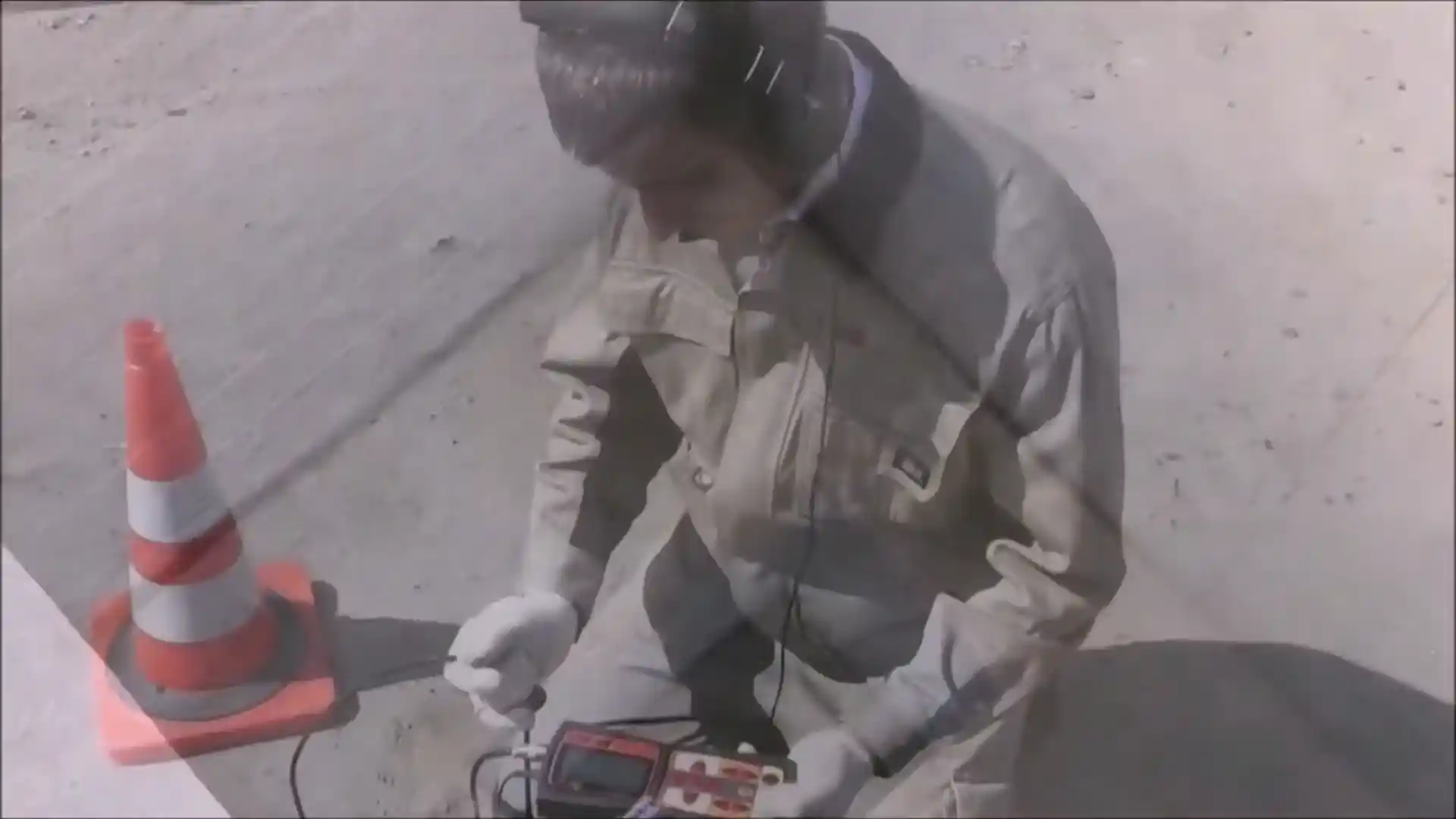
The visit starts with system isolation so the sound we chase belongs to the guilty line, then a route walk with the tracing gear, then the sweep itself: sensor placements every few feet, headphone and meter readings logged, and the intensity map converging on a peak. The peak gets verified from a second direction before any paint touches the ground, because a mark we are not sure of is a hole in your slab we are not sure of.
You get the located point, the confidence behind it, and repair options priced from a known target. Listening starts at (626) 898-6169.
Acoustic questions from above the pipe
Can you hear a leak through my tile floor?
Yes. Tile over slab adds a layer but transmits well, and the sweep simply calibrates to it: readings compared tile-to-tile mean as much as readings compared slab-to-slab. What matters is consistency of surface during comparison and enough pressure in the line to keep the leak singing. Rugs and furniture move aside for the sweep; the tile itself is no obstacle.
Why did you ask us to turn everything off during detection?
Because every running device is a competing instrument. A refrigerator compressor, a pool pump, an air conditioner, even a toilet refilling all put sound into the structure on bands that overlap the leak’s. Silencing the household for the sweep raises the leak’s voice relative to everything else, shortens the search, and sharpens the mark. It is the cheapest sensitivity upgrade the method has.
The leak was heard strongest in one room but found in another. How?
Sound travels along pipe walls efficiently, so a fitting or valve can broadcast a leak that lives yards away, like a string telephone. That is why intensity mapping uses many points and why the route matters: the true peak sits on the pipe’s actual path over the breach, while secondary peaks mark good conductors. Reading the difference is precisely the practiced part of the craft.
A question we did not answer here is a call we are glad to take: (626) 898-6169.
Related services & areas
Acoustic findings hand off to these pages constantly.
Eight methods, one discipline
Instruments first, evidence always, and a mark worth trusting before anything opens. The toolbox answers the phone.
☎ Call (626) 898-6169 · 24/7