Electronic method · La Puente & West Covina, CA · The map before the search
Electronic Leak Detection in La Puente & West Covina, CA
Before anyone listens for a leak, someone has to know where the pipe actually is, and in houses remodeled three times since the Eisenhower years, nobody does. Electronic detection builds the map first: routes, depths, and then, by calculation, the failure point itself. (626) 898-6169 draws it.
Tracing: making buried pipe visible from the surface
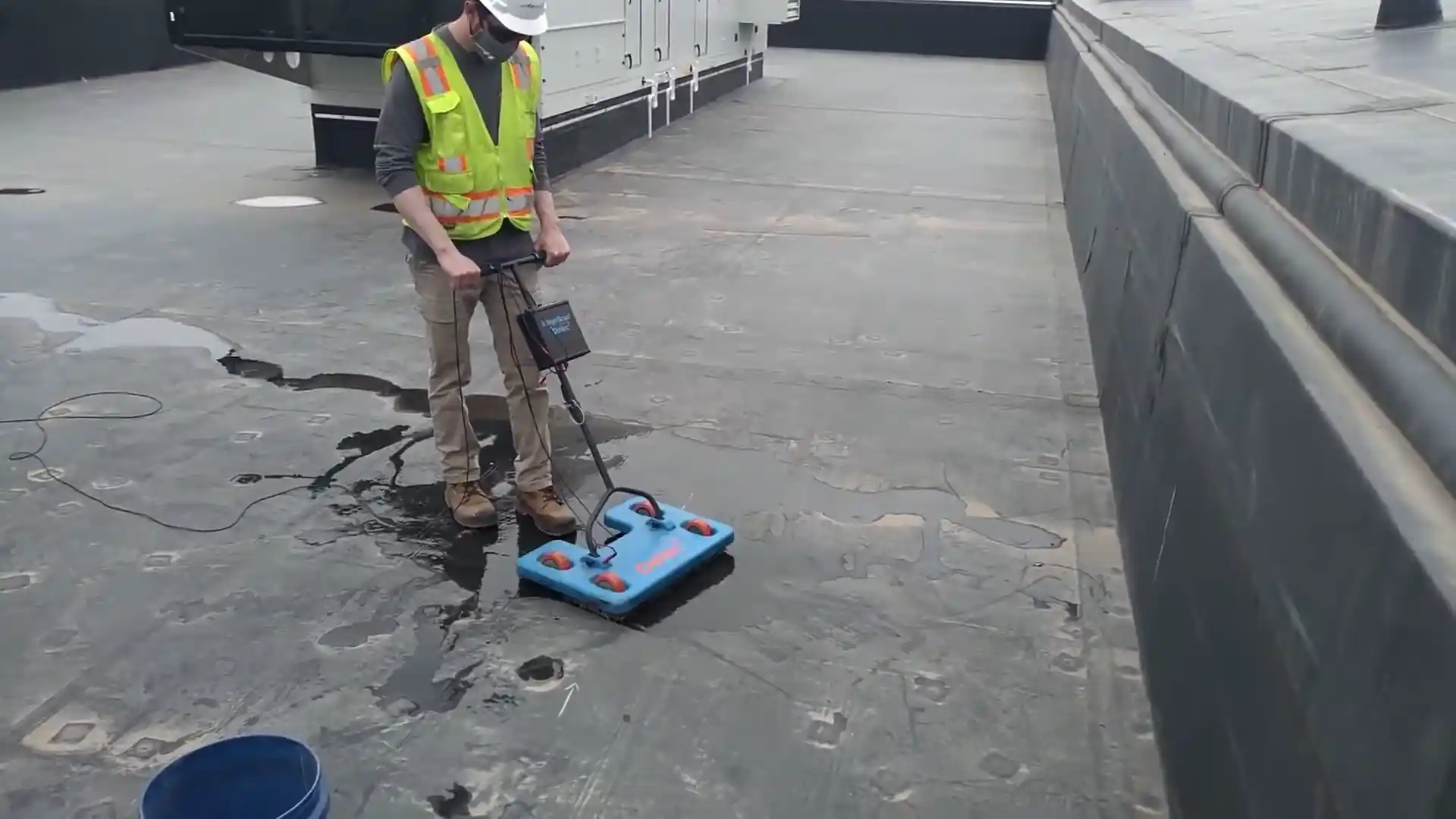
Line tracing works by giving the pipe a voice. A transmitter couples a signal onto a metallic line, at a valve, a bib, or the meter, and a receiver above ground follows the signal’s field, painting the route as it goes and reading depth from the field’s geometry. Non-metallic lines get a conductive tracer fed through them, or a sonde, a small signaling beacon pushed along the run whose position the receiver pinpoints from above.
The output is the drawing your house never had: where the service line really crosses the yard, which wall the repipe of 1994 actually used, where the irrigation main wanders. Around Glenford Park’s remodel-layered homes, the traced map disagrees with the remembered one more often than not.
Correlation: finding the leak by arithmetic
With the route known, correlation turns leak-finding into a timing problem. Two sensors clamp to the line at accessible points bracketing the suspect run, both hearing the same leak through the pipe wall. Sound travels at a known speed in a given pipe material and size, so the difference in arrival time at the two sensors, processed by the correlator, computes the leak’s distance from each end. The math does not care about depth, lawn, or driveway; it cares about the pipe, which is the point.
Correlation shines exactly where surface listening struggles: long service lines, runs under hardscape, and depths that fade a ground microphone. It narrows fifty feet of suspicion to a spot we then confirm by ear.
Valves, meters, and the electronic ear at the fittings
Electronic listening also works at the system’s hard points. Contact sensors on valves, meters, and hydrant-side fittings read the noise the pipe itself carries, useful for confirming a leak exists on a given segment before any surface work begins, and for the quick triage question every job starts with: which side of this valve is the noise on? Metered readings from the utility side, matched against our contact readings, keep the search honest about whose pipe is talking.
It is unglamorous, gauge-and-clamp work, and it routinely saves an hour of sweeping by cutting the search space in half at the first fitting.
Where electronic methods sit in the sequence
Electronic work is the toolbox’s navigator: it rarely finishes a job alone and it starts most of them. Trace, then listen; correlate, then confirm; and only then mark. Its findings feed the acoustic sweep, aim the thermal camera at the right wall, and tell the tracer-gas rig which line to charge. On your documentation, the traced routes remain useful long after the leak is history, for every future project that ever wonders where the pipes went.
Mapping before digging is how the small holes stay small: (626) 898-6169.
Electronic method questions from the receiver end
Can you trace plastic pipe, or only metal?
Both, by different tricks. Metal lines carry the transmitter’s signal directly. Plastic lines cannot, so we either push a conductive tracer or a signaling sonde through the run and follow that, or trace the metallic sections that bracket the plastic and interpolate the route between known points. Irrigation and pool plumbing, mostly plastic here, get traced this way every week.
How accurate is the depth reading?
Good enough to plan an excavation and honest about its limits. Field-geometry depth readings on a clean trace are reliable within a practical margin, tightening further when we take readings from multiple positions. Congested corridors, parallel utilities and old abandoned lines, add uncertainty, which is why marked depths come with stated confidence and why hand digging near crossings is standard practice anyway.
You traced a pipe where no pipe should exist. What is it?
Welcome to the archaeology layer. Yards and walls hold abandoned lines, prior owners’ projects, and reroutes nobody documented, and the tracer finds them all impartially. Each mystery line gets identified by connection testing, live, dead, or orphaned, and dead ones are noted on your map and capped if they still touch pressure anywhere. Finding them now is cheaper than meeting them with an excavator later.
A question we did not answer here is a call we are glad to take: (626) 898-6169.
Related services & areas
The map feeds these methods and repairs directly.
Eight methods, one discipline
Instruments first, evidence always, and a mark worth trusting before anything opens. The toolbox answers the phone.
☎ Call (626) 898-6169 · 24/7