Non-invasive policy · La Puente & West Covina, CA · Evidence before cutting
Non-Invasive Leak Detection in La Puente & West Covina, CA
Non-invasive is not one tool. It is the rule the whole toolbox works under: nothing on your property gets cut, drilled, or demolished to find a leak, only to fix one already found. The distinction sounds small and decides everything about what your house looks like afterward. (626) 898-6169 works under the rule.
The rule, stated plainly
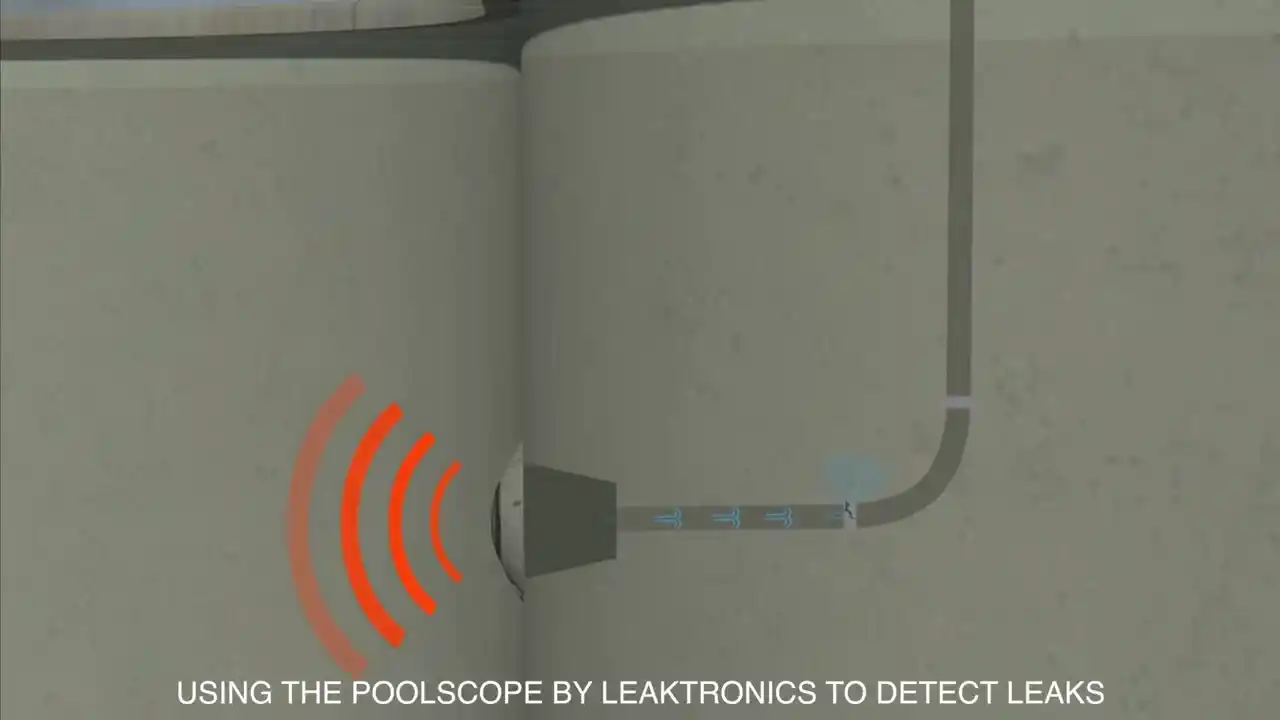
Here is the policy in one sentence: diagnosis happens with instruments, repair happens with tools, and the tools do not come out until the instruments have finished. Listening gear, tracing gear, thermal and moisture imaging, pressure isolation, camera inspection through existing openings, and tracer gas all interrogate a house without wounding it. The first intentional opening we make is the access for a located repair, sized to that repair, at a point already proven.
The alternative has a name in the trade, exploratory demolition, and a shape every homeowner has heard about: walls opened on theory, slabs chased on hunches, and a repair bill wearing a renovation’s clothes.
What non-invasive looks like room by room
In practice the rule reads like restraint. A suspected wall leak gets mapped by meter and lens from the paint side; the drywall stays whole until a bay is convicted. A slab suspicion gets isolation, tracing, listening, and thermal work on the finished floor; the concrete waits for a verified mark. A tiled shower gets flood-tested and its systems cycled; no tile leaves the wall to satisfy curiosity. Even drains, which need eyes inside, receive them by camera through existing cleanouts rather than by cutting new ones on speculation.
A hub city of hard-working houses deserves diagnostics that respect the finish work families paid for, and that respect is enforceable: it is simply the order of operations.
Why the industry default is worse, and persists
Exploratory opening persists because it looks like action and bills like work: every hole is billable whether or not it finds anything, and the leak is eventually somewhere. The homeowner pays for the misses, the patches, and the repaint, and the invoice calls it thoroughness. Instrument-led detection inverts the incentive: the finding is the product, the misses happen on meters and screens where they cost minutes, and the single opening that follows is the cheapest one possible.
We publish the rule because incentives you can read are incentives you can hold us to.
What you keep when nothing extra is opened
The savings compound quietly. Original tile that stays original, in tract homes where matching discontinued patterns is impossible. Stucco unbroken, so the exterior never grows a patch archipelago. Insurance conversations built on instrument evidence instead of demolition photos. And the schedule: diagnostic days that end with the house exactly as it started, plus an answer.
When the repair does open something, it opens the smallest something, once, on purpose. That is the entire philosophy, and it is bookable: (626) 898-6169.
Questions about the no-demolition rule
Is non-invasive detection less accurate than opening things up?
It is more accurate, which surprises people. Opening a wall shows you that wall; instruments survey whole systems and follow the evidence wherever it runs, including places nobody would have guessed to cut. Demolition only confirms a theory you already had. The instrument-led sequence generates the theory from measurements first, which is why its single access point so consistently lands on the pipe.
Are there cases where you simply must open something to diagnose?
Rarely, and never silently. A handful of geometries, a sealed cavity with no camera path, certain shower assemblies, can require a small diagnostic access after instruments have exhausted their reach. When that happens you hear the reasoning first, approve the specific opening, and it gets placed where patching is cheapest. The rule’s spirit holds: openings are decisions, never reflexes.
Does the no-demolition approach cost more than just cutting in?
It costs less in every accounting that includes the patching. Instrument time is modest and predictable; exploratory holes are open-ended and each one carries drywall, tile, paint, and hours whether it found pipe or air. The comparison homeowners actually experience is one small planned opening versus several speculative ones, and the totals are not close. Precision is the budget option wearing a technical name.
A question we did not answer here is a call we are glad to take: (626) 898-6169.
Related services & areas
The rule governs every method and repair on these pages.
Eight methods, one discipline
Instruments first, evidence always, and a mark worth trusting before anything opens. The toolbox answers the phone.
☎ Call (626) 898-6169 · 24/7