
Appliance connections · La Puente & West Covina, CA · Dishwashers & washers
Appliance Leak Detection & Repair in La Puente & West Covina, CA
The two worst floods most households ever meet arrive through rubber hoses: a washing machine supply line that lets go at full pressure, or a dishwasher connection failing mid-cycle behind a panel nobody opens. The appliances get the blame; the plumbing serving them earns it. (626) 898-6169 serves the plumbing side.
Where the plumber’s territory meets the machine’s
Every water appliance sits at a border. On the plumbing side: the supply valves, the hoses, the drain standpipe or air gap, and the connections that marry them to the machine. On the appliance side: door seals, internal pumps, tub gaskets, the country of the technician. Leak diagnosis starts by placing the water on the correct side of that border, because a plumber replacing hoses under a machine with a torn door boot fixes nothing, and the reverse wastes an appliance call on a valve.
The placement test is behavioral: water that appears with the valves open but the machine idle belongs to plumbing; water keyed to specific cycle phases, fill, wash, drain, gets read against what each phase pressurizes.
Washing machines: the highest-stakes hoses in the house
A washer’s supply hoses hold full house pressure around the clock, and a burst one delivers water at a rate that finds every room downhill. Rubber hoses age from the inside, bulge before they burst, and deserve replacement on a calendar rather than after a disaster; braided stainless lines are the standard upgrade. The valves behind the machine, often a recessed box with two quarter-turns or an old gate pair, must actually close, and decades-old ones frequently will not, which we fix while access is easy.
Drain-side failures are gentler but messier: a standpipe that overflows from a partial clog downstream, or a drain hose that ejects mid-spin. Both are plumbing-side and both diagnose in one observed cycle.
Dishwashers: the hidden supply and the borrowed drain
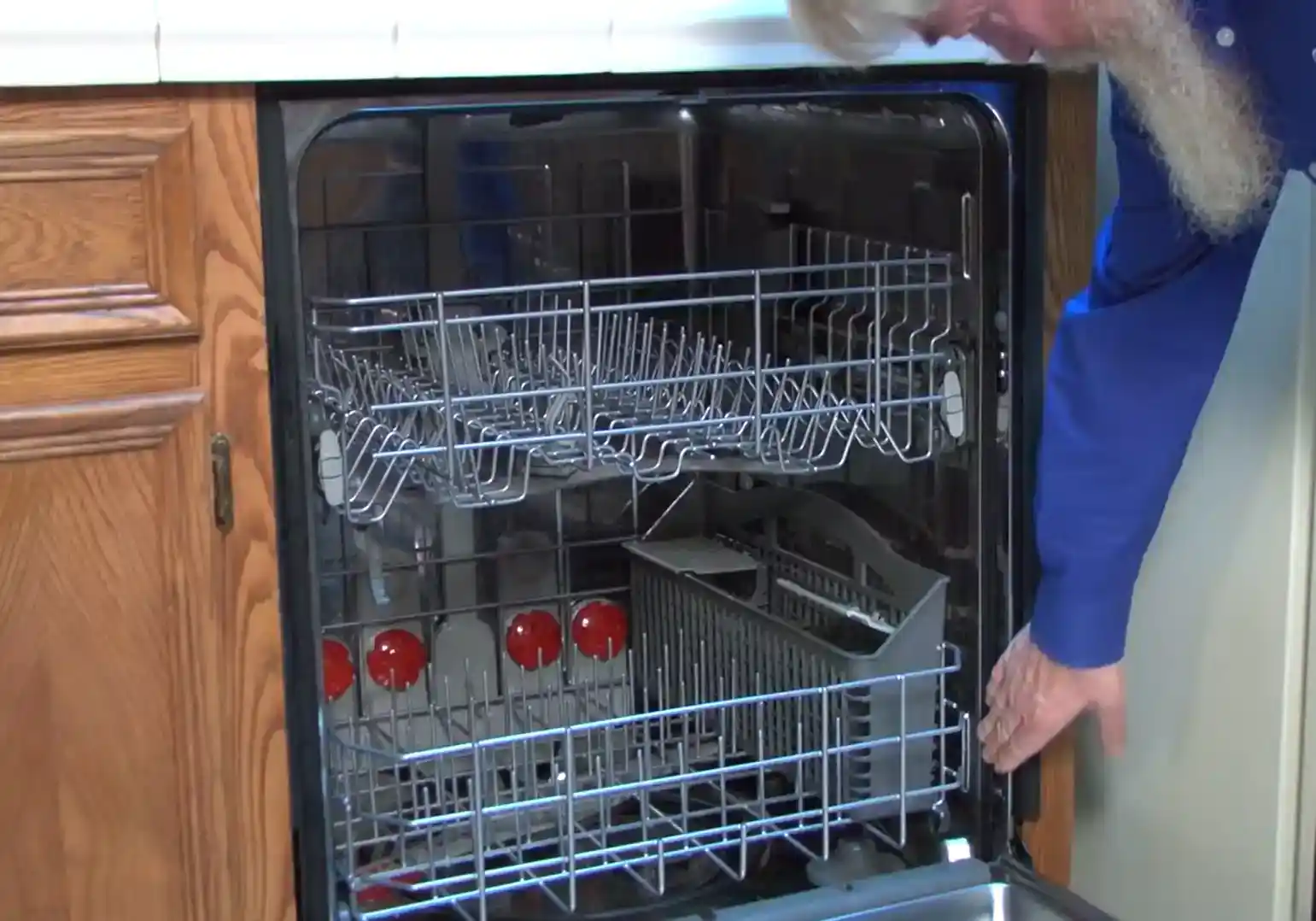
A dishwasher’s water story runs under the adjacent cabinet: a supply line from a stop under the sink, and a drain hose looping back to the sink’s trap or disposal. Its leaks therefore surface as under-cabinet mysteries: the supply’s compression fitting weeping at the stop, the hose chafing where it passes through the cabinet wall, or the drain connection seeping at the clamp. The machine’s own base leaks join the puddle from the other side of the border, and the toe-kick panel hides everyone equally.
Our diagnosis pulls the panel, runs a cycle, and watches each border crossing in turn, with the moisture meter reading the floor cavity that quiet leaks have often been feeding for months.
Installations and the details that prevent the sequel
Half of appliance leak work is really installation correction: hoses cranked without washers, drain hoses missing their high loop, supply stops reused past their years because replacing them felt like scope creep. When we connect or reconnect an appliance, the details ride along by default, new washers, correct loop or air gap geometry, valves that close, and a leak pan or detector where the location justifies one, second floors especially.
Around the compact lots toward South El Monte and every laundry alcove like them, the goal is the same: machines that borrow the plumbing politely and return it dry. (626) 898-6169 makes the introductions.
Appliance connection questions from the laundry line
How do I tell if the puddle is the washer or the plumbing?
Idle the machine with its valves open for a day, floor dried and a paper towel laid under the connections. Water arriving with the machine idle convicts the plumbing side: valves, hoses, or their fittings. A dry idle followed by water during a run points into the machine or its drain ejection. That one observation sorts which trade you need before anyone is dispatched, and we are happy to talk it through by phone.
My washer valves have not been touched in twenty years. Should I test them?
Yes, gently, and be ready for the answer. Old gate-style washer valves seize open, weep at the stem when finally turned, or shear their handles, which is why so many laundry floods run long: the nearest shutoff did not shut. Test with a light hand; anything that resists, leaks, or spins free goes on the replace list. Modern quarter-turn boxes make the whole question boring, which is the goal.
The dishwasher leaves water at the cabinet toe-kick only sometimes. Why?
Intermittent toe-kick water tracks specific cycle phases or loads. Drain-phase leaks implicate the hose and its connection under the sink, pressurized only during pump-out. Fill-phase leaks look at the supply fitting. Heavy or tilted loads can splash past a door seal that survives normal runs. Note which cycles precede the puddle; that schedule is the diagnosis’s first page, and one observed cycle usually writes the rest.
The washer flood already soaked the flooring. What now?
Fixing the valve or hose stops the source, but a floor or subfloor that sat wet for even a day needs its own drying-out process to avoid warping or mold. this Fairfax water damage restoration company covers that follow-up work in more detail for readers dealing with the same aftermath elsewhere in the country.
A question we did not answer here is a call we are glad to take: (626) 898-6169.
Related services & areas
Border disputes between machines and plumbing settle on these pages.
Outdoors, in the cabinet, or in the cabinet outdoors
Every connection on the property answers to the same discipline: located, priced, fixed once. The phone answers first.
☎ Call (626) 898-6169 · 24/7