
Sink leaks · La Puente & West Covina, CA · The cabinet ecosystem
Sink Leak Detection & Repair in La Puente & West Covina, CA
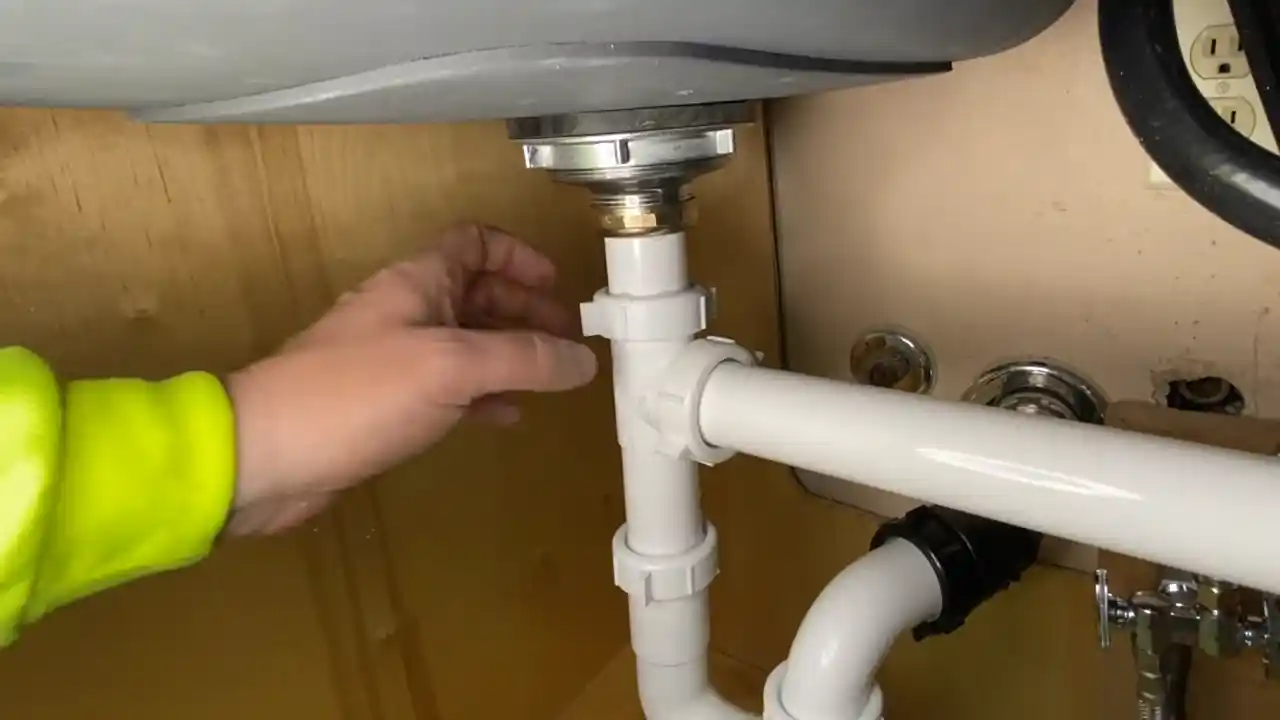
Under every kitchen sink lives a small crowded neighborhood: two supply lines, two shutoff valves, a faucet’s underside, a strainer, a trap, maybe a disposal and a dishwasher tie-in, all sharing one dark cabinet. When the cabinet floor swells, any resident could be guilty. (626) 898-6169 interrogates them all.
Reading a wet cabinet like a map
The first diagnostic question under a sink is not what is leaking but when. Water that appears only while the faucet runs points at the drain side: strainer, tailpiece, trap joints, or the dishwasher and disposal connections. Water that accumulates with everything off points at the pressure side: supply lines, shutoff valves, or the faucet’s underbody. Water that shows up after the dishwasher cycle has its own suspect list entirely.
So we test in sequence: dry everything, run the faucet, plug and fill the basin and release it, cycle the appliances, and watch with a light. Ten methodical minutes beats a month of towels, and in the busy kitchens along the Valinda border, towels are usually how the story starts.
Pressure-side repairs: the parts that flood
Supply lines and shutoff valves are the cabinet’s only occupants connected to full house pressure, which makes them the only ones capable of real flooding rather than mere seepage. Aging braided lines get replaced on sight when their date is past; plastic-nut budget lines get replaced on principle. Shutoff valves that have seized, and many originals here have, are swapped for quarter-turn valves that will actually work during the next emergency.
It is unglamorous work with the best insurance value in plumbing: the five-minute flood that never happens because the parts were renewed while someone was already under the sink.
Drain-side repairs: traps, strainers, and tie-ins
Drain-side leaks seep rather than spray, and their damage is patient: swollen particleboard, lifted cabinet veneer, the mildew smell that greets you at the doors. Strainer putty dries out and lets basin water track underneath. Trap slip joints loosen or their washers age out. Disposal discharge gaskets and dishwasher hose clamps weep at connections nobody has looked at since installation. Each is a modest fix once identified, and identification is exactly what the run-and-watch sequence delivers.
Where the leak turns out to live past the trap, inside the wall at the drain arm, the job graduates to our drain-line work, and the same visit carries it forward without a second appointment.
Bathroom sinks, and the special case of two of everything
Bathroom vanities repeat the kitchen’s ecosystem in miniature, with pop-up assemblies standing in for strainers and, in shared family bathrooms, double the fixtures and double the joints. Pop-up pivot rods weep past worn gaskets, overflow channels crack in older basins, and the tight quarters of a small vanity make amateur repairs awkward enough that many cabinets we open contain three previous attempts in three materials.
We reset the whole assembly correctly, replace what is spent, and leave the cabinet dry and the extra putty in the truck: (626) 898-6169.
Under-sink questions from La Puente kitchens
The cabinet is wet but everything looks dry when I check. How?
Because the leak only performs while the system is in use. Drain-side seeps run when water flows and stop when it stops; dishwasher tie-ins leak only mid-cycle; a faucet base gasket weeps only while the spout swings. By the time you look with everything off, the evidence has soaked in. The fix is testing in motion: run each function while watching underneath, which is precisely how our visit proceeds.
Is the white crust on my supply valves a leak?
It is the fossil of one. Mineral crust on a valve or fitting marks where water has been escaping slowly and evaporating, leaving its dissolved load behind. The leak may be tiny, but crust means the joint is compromised and the trajectory is one-way. Photograph it and have it addressed before the seep chooses a worse pace; crusted shutoffs especially, since they are also the valves least likely to close in an emergency.
Can I just tighten the trap joints when they drip?
A gentle snug on a slip nut is fair first aid and sometimes ends the story. But slip washers harden with age, and over-tightening cracks nuts or distorts the seal, converting a drip into a steady leak. If a joint needs more than a light hand-tighten, the washer is asking for replacement, which costs pennies and holds for years. Two failures after tightening means stop tightening.
A question we did not answer here is a call we are glad to take: (626) 898-6169.
Related services & areas
Cabinet work along the Valinda side tends to involve these next doors.
Small fixture, real water, one fix
Fixture leaks are the cheapest ones on this site to solve and the most expensive to ignore. The line answers around the clock.
☎ Call (626) 898-6169 · 24/7